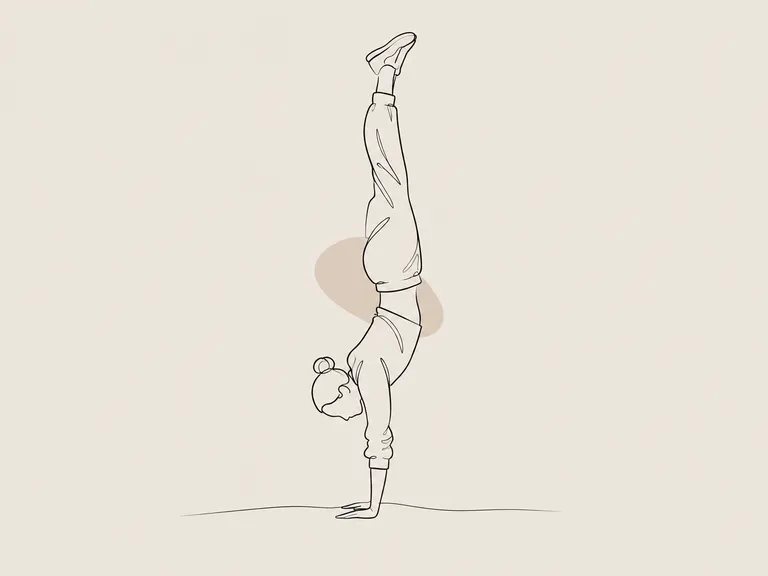
The handstand sex position sounds like a circus act, and honestly, it is a bit of one. One partner (the Flyer) goes upside down with their hands on the floor, while the standing partner (the Base) holds their thighs and the Flyer's legs wrap around the Base's waist. The Flyer is usually the receiving partner. You don't need to be a gymnast, but you do need strength, a cleared floor and a good sense of humor. If flexibility or strength is what holds you back, a few props make a gentler version possible.
How to Do the Handstand Position Step by Step
Warm up the joints that will carry the load: wrist circles and palm presses, shoulder rolls, a few cat-cow stretches and a short plank. A regular stretching routine for a better sex life makes this far less dramatic.
- Set up the space. Put a firm mat on the floor with cushions around it. The Base stands with feet shoulder-width apart and knees soft.
- Place the hands. The Flyer stands in front of the Base, facing away, folds forward and plants their hands on the mat shoulder-width apart, fingers spread, about a stride ahead of their feet.
- Lift one leg at a time. The Flyer raises one leg back toward the Base, then the other. The Base catches each thigh (not the ankle) and guides it around their waist. Lift with control, don't jump, and the Base never yanks.
- Find the line. The Flyer crosses their ankles behind the Base's back and keeps their arms straight without locking the elbows. Their body can angle forward and doesn't need to be vertical. The Base holds the Flyer's hips.
- Match heights. If the Base's hips sit higher than the Flyer's pelvis, the Base bends their knees. If they sit lower, the Flyer raises their hands on a stable prop.
- Move small. The Base leads with slow, short movements while the Flyer focuses on balance. Start with holds of a minute or less.
- Come down together. The Base lowers one leg at a time to the floor. The Flyer walks their hands back, kneels and rests with their head up before standing.
Why the Handstand Position Works
Being upside down changes the tilt of the pelvis, so the angle of contact is unlike almost anything you do lying down. For people with a vagina, it may press more toward the front wall, which some find intense and others simply find odd. The leg wrap holds the pelvises close together, so penetration can feel deep and full, but the range of movement is short. Think pressure and grinding rather than long strokes, with the Base controlling depth.
The head rush from being inverted heightens sensation for some people and is simply too much for others. Then there's trust: the Flyer relies on the Base to keep them steady, which turns sex into a shared, slightly silly challenge.
4 Handstand Position Variations
- Bed-Edge Half Handstand. Only the upper body tips over the mattress edge, so the bed carries most of the weight. It's the best start when strength or shoulder flexibility is the limit.
- Angled Handstand on Blocks. Yoga blocks or a low step let the body lean in at roughly 45 to 60 degrees, which needs far less overhead shoulder mobility than a vertical line.
- Wall-Braced Base. The standing partner leans against a wall for extra stability, useful with a taller or heavier Flyer.
- Wheelbarrow Low Inversion. Start on all fours and lift only to hip height. The torso stays nearly horizontal, so the head rush is milder and exiting is easy.
Who the Handstand Position Is Not For
Skip it, or stick to the bed-edge or wheelbarrow version, if any of these apply:
- Wrist, elbow or shoulder pain or past injuries: these joints carry most of the Flyer's weight.
- Neck or back problems: a wobble or fall loads the spine fast.
- Pregnancy: see the FAQ below.
- Conditions made worse by being head-down: high blood pressure, heart conditions, glaucoma, recent eye surgery, vertigo or reflux. Check with a doctor first.
- Fatigue or alcohol: both make falls and messy exits more likely.
Comfort, Safety and Consent
Clear away glass, hard furniture and anything with sharp corners. Cushions soften a fall, but don't do the position on soft bedding, which makes balancing harder.
Agree on signals before anyone goes upside down. The Flyer's hands are busy, so pick a word for "stop now" plus a non-verbal backup, like squeezing the Base twice with their legs. Pain, tingling hands, dizziness, a headache or pressure behind the eyes all mean come down right away, and either partner can call it without explaining why. Barriers and other safer-sex basics still apply.
Related Positions to Explore
Like the inverted angle but not the effort? Browse other upside-down sex positions. Many of them keep the Flyer's shoulders or hips on the bed.
Handstand Position FAQ
Is the handstand position good for beginners?
Not as a first try, but the bed-edge version is beginner-friendly. Before trying the full position, the Flyer should be able to hold a chest-to-wall handstand for 20 to 30 seconds without their shoulders or lower back sagging. Until then, practice the bed-edge or wheelbarrow version.
Can you do the handstand position while pregnant?
No, skip inversions during pregnancy. Balance shifts as the bump grows, and a fall carries real risk. Side-lying positions such as spooning give a comfortable angle with no balance demand. Ask your midwife or doctor if you have specific questions.
What can I do if my wrists hurt?
Come down at the first sharp pain and don't push through it. For mild discomfort, spread your fingers wide and press through your fingertips so the heel of your hand doesn't take all the weight. Push-up handles or yoga blocks ease the wrist angle, and the bed-edge version removes most of the load.
Does the Base have to lift the Flyer's whole weight?
No, the Base holds the legs and steadies the hips while the Flyer's arms carry their upper body. That makes technique more important than size. With a big height or weight difference, use knee bends or blocks to line up the hips, or try the wall-braced version.