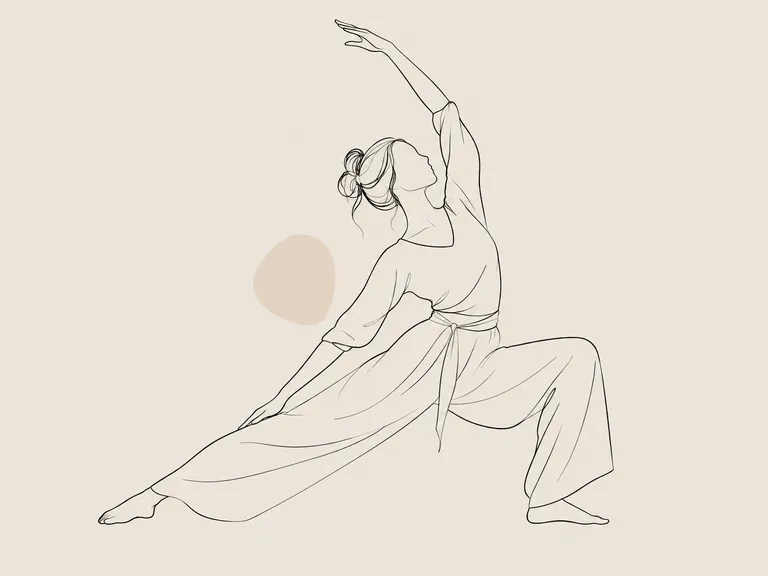
A flexible sex position is any position where one partner's range of motion does the heavy lifting: legs on shoulders, deep folds, wide splits or a lifted leg while standing. Bending further changes the angle and depth of contact, which can feel new and exciting, but it also asks your hamstrings, hips and back to cooperate. Below are seven positions ranked by how much bend they really need, how to warm up so nothing pulls halfway through, and when to pick something easier.
How to Try a Flexible Sex Position Step by Step
- Warm up for 5 to 10 minutes. Cold muscles pull; warm ones lengthen. Use gentle, moving stretches rather than long holds: leg swings, hip circles, cat-cow and a few slow lunges. Doing it together as part of foreplay counts. For a longer routine, see our guide to stretching for a better sex life.
- Agree on the plan. Pick the position, decide who controls pace and depth, and set a stop word or hand signal that works even when someone can't talk easily.
- Set up a stable space. A firm mattress, the floor with a blanket, or a sturdy sofa edge works. Keep pillows within reach and clear away anything you could knock into.
- Start at about half your range. Let the bendier partner decide how far the stretch goes. Pillows are there to support a joint, not to push a leg further than it wants to go.
- Exit the way you came in. Reverse the steps slowly instead of dropping a leg or shifting weight suddenly. If a muscle cramps, ease off the angle first, then straighten out.
Why Flexible Positions Work
Changing the geometry changes the sensation. Raising or folding the legs tilts the pelvis, which changes the depth and angle of penetration and, for some people, may bring pressure to areas that feel especially good, such as the front vaginal wall. Wide-open legs can also make it easier to reach the clitoris by hand or with a toy. Not everyone notices a difference, and deeper isn't automatically better: for some receiving partners, deep angles bump the cervix and hurt.
There's a relationship payoff too. Holding an unusual shape together takes trust and constant feedback, the same skills that make more acrobatic sex positions possible.
7 Flexible Sex Positions, From Gentle to Extreme
Spread Eagle (bend level: low to moderate)
The receiving partner lies on their back with legs opened wide; the penetrating partner kneels or lies between them. It mainly asks for inner-thigh and hip mobility. Make it easier: bend the knees and tuck pillows under them.
Legs-over-Shoulders (bend level: moderate)
The receiving partner lies on their back and rests their calves or ankles on the shoulders of their kneeling partner. It needs hamstring length and a relaxed lower back. Make it easier: rest the legs against the partner's chest instead, with a firm pillow under the hips.
Modified Lotus (bend level: moderate)
One partner sits upright, cross-legged or with legs out; the other sits on their lap facing them and wraps their legs around their partner's waist. It asks for hip flexion from both and core control from the person on top. Make it easier: put cushions behind the seated partner's back; the top partner can keep their feet on the bed.
Squatting Rider (bend level: moderate to high)
The penetrating partner lies on their back. The receiving partner squats astride them with feet flat and moves by bending and straightening their legs. It needs ankle, knee and hip mobility plus thigh stamina. Make it easier: hold a headboard or your partner's hands, or drop to kneeling when your thighs start to burn.
Standing Leg-Lift (bend level: moderate to high)
Both partners stand; the receiving partner faces away and raises one leg, which the partner behind supports. It tests balance and hamstring flexibility, and works best when your hips are at a similar height. Make it easier: lean forward against a wall and keep the lift low, or rest the foot on a chair or the bed.
Wheelbarrow (bend level: high, mostly strength)
One person walks on their hands while the standing one holds them by the thighs. It's an arm, wrist and core workout more than a stretch, and blood rushes to the head quickly. Make it easier: drape your chest over the edge of a bed or sofa.
Viennese Oyster (bend level: extreme)
The receiving partner lies on their back and folds both legs up and back until the feet or ankles cross behind or near the head; the other partner kneels in front. Few bodies do this comfortably, and it loads the neck, upper back and hips. There's no truly gentle version: if the legs don't fold easily, switch to Legs-over-Shoulders.
Who Flexible Positions Are Not For (Right Now)
They suit people who already move a lot, through yoga, dance or climbing for example, but anyone can try the gentler options. Body proportions, height difference and past injuries matter more than effort, and either partner can take either role. Skip or modify if you have:
- Back problems: deep folds like the Viennese Oyster or a high Legs-over-Shoulders flex the spine hard.
- Hip, knee or ankle issues: avoid deep squats and wide splits.
- Wrist, shoulder or neck pain: skip the Wheelbarrow and anything that puts weight on the upper back.
- Hypermobility: being very bendy doesn't mean your joints are stable. Stay in the middle of your range and stop if a joint feels like it's slipping.
- Pregnancy: see the FAQ below.
Comfort, Safety and Consent
A stretch or muscle effort is fine. Sharp pain, pinching, numbness, tingling, or pain that lingers after you stop means stop now. Pillows under the hips, lower back or knees should take strain away, never add it. Fatigue counts too: things tend to pull when a position has been held too long.
Consent here is ongoing. Check in out loud during transitions, because in folded or rear-entry shapes you can't always see each other's faces. "That's enough bend for today" is a complete sentence, and changing your mind mid-position is always fine, whoever suggested it.
Flexible Sex Positions FAQ
Are there flexible positions that are good for beginners?
Yes: start with a pillow-supported Spread Eagle, or Legs-over-Shoulders with the legs resting on your partner's chest. Both let you feel how your hips and hamstrings respond without balancing or bearing weight. Move up a level only when the easier version feels comfortable from start to finish.
Can you try flexible positions during pregnancy?
Gentle, supported versions may be fine, but deep folds, squats, the Wheelbarrow and standing balance positions are best left out. Pregnancy hormones loosen ligaments and your center of gravity shifts, so overstretching and falls become more likely. From mid-pregnancy, many clinicians suggest avoiding long stretches flat on your back, so side-lying or supported seated positions are usually more comfortable. Check with your midwife or doctor if you have any complications.
How are flexible positions different from acrobatic ones?
Flexible positions mostly test range of motion; acrobatic ones add serious strength and balance. Flexibility is how far a joint can move, strength is what holds a shape, and balance keeps you stable while you hold it. The Wheelbarrow and Standing Leg-Lift sit on the border, which is why they rank higher than the stretch alone suggests.
What if only one of us is flexible?
Where the position allows it, give the bendy role to the bendier person, whoever is penetrating or receiving. The other partner's job is to be a stable base by kneeling, sitting upright or lying still. Lotus and Squatting Rider swap roles easily, especially with a strap-on or toy.
Is it normal to feel sore the next day?
Mild muscle soreness, like after a new workout, is normal and usually fades within a day or two. Joint pain, sharp pain or soreness that gets worse rather than better is not; rest and see a doctor or physiotherapist if it lingers. Next time, warm up a little longer and hold each position for less time.