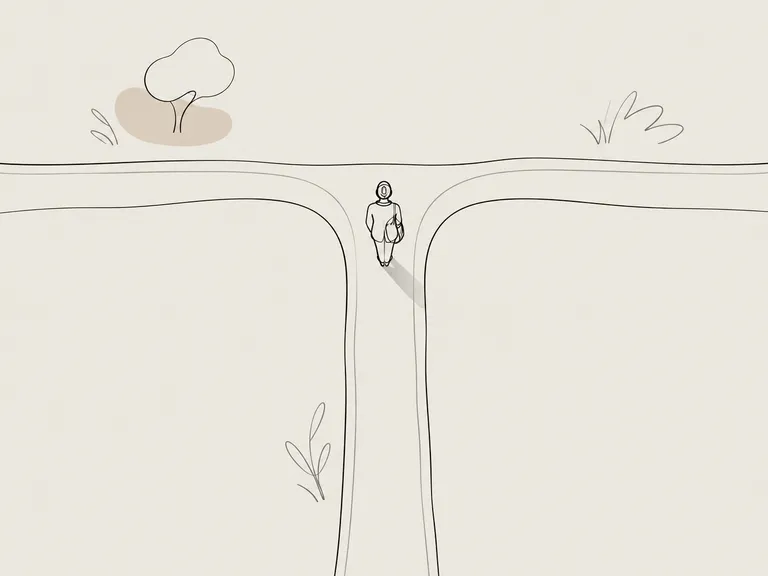
The Tbone sex position is named for its geometry: one partner lies on their back, the other lies on their side at a right angle, and together your bodies make a T shape. The first try can feel like assembling flat-pack furniture without the manual, but once the pieces click, the bed does nearly all the work. Here's the setup, how it feels for each of you, and easier alternatives if it's not your thing.
How to Do the Tbone Position Step by Step
- Use a bed. You need room for two bodies at a right angle, so a bed beats a sofa. Keep a firm pillow and lube within reach.
- The receiving partner lies on their back with knees bent and feet flat on the bed.
- The other partner lies on their side, perpendicular. Their torso points away to the side, and they scoot their hips in until their pelvis sits just beneath the receiving partner's raised thighs.
- Drape the legs. The receiving partner rests both legs over the side-lying partner's top hip and waist, knees loosely bent. This drape is what makes the T possible; without it, your hips can't meet.
- Fine-tune the height. If the angle feels off, slide a pillow under the receiving partner's hips or have the side-lying partner shift slightly up or down. Side entry takes a little patience, so be generous with lube.
- Start small. The side-lying partner usually leads with short hip movements (with a penis, strap-on or toy), while the receiving partner rocks their pelvis to meet them.
What It Feels Like for Each Partner
For the receiving partner: lying flat with your legs supported is restful, and both hands stay free for clitoral stimulation, a toy, or holding on to your partner. Penetration tends to be moderate rather than deep, which suits people who find deep positions uncomfortable.
For the side-lying partner: you get a good view and control of rhythm, but limited range, since big thrusts aren't really possible from your side. Your lower arm can go numb, so bend it under your head instead of lying on it.
One honest trade-off: your faces end up far apart, so kissing is off the menu. Eye contact, talking and hand-holding are not.
Why the Tbone Position Works
Crossing at a right angle changes the direction of internal contact compared with parallel positions. For some people this angle may press pleasurably toward the front wall of the vagina (the area often called the G-spot) or toward the prostate; for others it simply feels "different", and that's fine too. Treat it as an experiment, not a promise.
It's also low effort: nobody holds their body weight on hands or knees, which spares wrists and knees and makes it easy to linger.
Tbone Position Variations
Knees-to-Chest Tbone
The receiving partner draws their knees toward their chest, feet resting against the partner's side. This tilts the pelvis up and can change both angle and depth. It asks more of the hips, so skip it if your hips or lower back complain.
Pillow-Lifted Tbone
A firm pillow or wedge under the receiving partner's hips brings both pelvises to the same level. It's the go-to fix when partners differ a lot in size or height.
Propped-Up Tbone
The side-lying partner rises onto a forearm. This adds range of movement and a better view but loads the shoulder and wrist, so drop back down when it starts to tire.
Who Tends to Enjoy It (and Who Should Skip It)
The Tbone suits couples who like slow, low-energy sex, people with knee or wrist issues, anyone who wants free hands for clitoral stimulation, and receivers who prefer moderate depth. It's less fun if you want vigorous movement or lots of kissing.
Modify or skip it if you have:
- Hip or lower-back pain. The leg drape flexes the hips. Keep the legs low and relaxed with a pillow under the hips, and stop if anything strains.
- Shoulder problems. This mostly affects the side-lying partner. Lie on your less sore side or switch to spooning.
- A recent injury or surgery. Wait until your clinician clears you for sex.
- Later-stage pregnancy. See the FAQ below.
Easier Alternatives to the Tbone
If lining up the T feels like too much work, these need less adjusting:
- Spooning: both partners on their sides, no angles to calculate, and plenty of closeness.
- Scissor position: a similar sideways feel with more freedom to grind.
For more ideas, browse our lover's guide to sex positions.
Comfort, Safety and Consent
Firm pillows are your alignment tools: under the receiving partner's hips for height, under their knees for lower-back relief, and under the side-lying partner's head or elbow for support.
Agree before you start that either of you can say "pause" or a chosen stop word at any moment, and that it will be honored right away. Sharp pain, numbness or pins and needles mean stop, separate and adjust. Quick check-ins keep the mood intact: "Is this angle okay?", "Another pillow?", "Slower?" Saying yes to trying a position never means yes to finishing it.
Tbone Position FAQ
Is the Tbone position good for beginners?
Yes, it needs no strength or balance, though lining up takes a try or two. First attempts often feel clumsy, usually because your pelvises sit at different heights. Laugh, add a pillow, and try again.
Can you do the Tbone position during pregnancy?
It can work early on, but lying flat on the back gets harder later in pregnancy. From around mid-pregnancy, long stretches on the back can cause dizziness or discomfort for some people. If the pregnant partner is on their back, a wedge under one side helps; otherwise spooning is usually more comfortable. Follow your clinician's advice.
What if the Tbone position hurts?
Stop, then change one thing at a time: height, leg angle or depth. Discomfort usually comes from a pelvis-height mismatch or too little lube. Pain that keeps returning across positions is worth discussing with a healthcare provider rather than pushing through.
How is the Tbone different from spooning and the scissor position?
The difference is body alignment: the Tbone is perpendicular, spooning is parallel. In spooning, both partners lie on their sides facing the same direction. In the scissor position, legs interlock like open scissors, while in the Tbone the receiving partner's legs simply rest over the other partner's hip.
Do you need to be flexible for the Tbone position?
No, the basic version only asks the receiving partner to rest bent knees over their partner's hip. The knees-to-chest variation is the only one that needs real hip flexibility. If your hips are stiff, keep your legs low and let a pillow do the lifting.