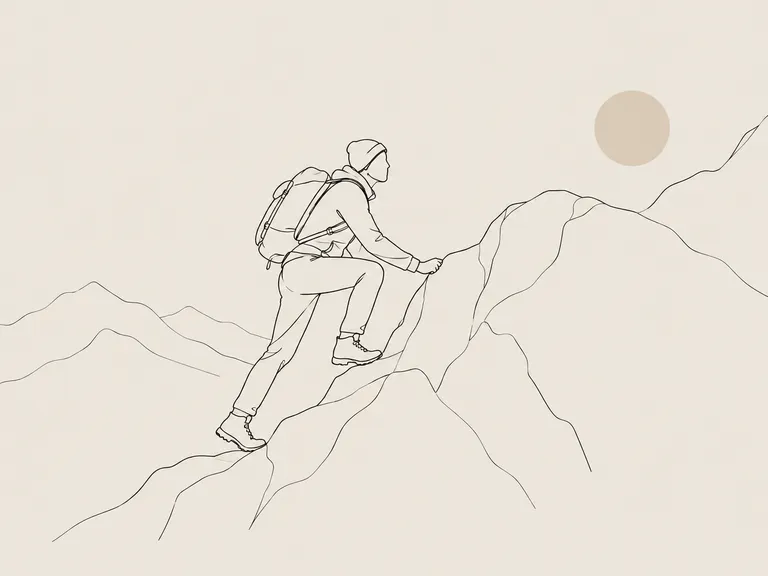
The mountain climber sex position is a face-to-face, athletic take on lying-down sex: the receiving partner lies on their back while the penetrating partner holds a push-up (plank) posture above them. Holding that plank takes real arm and core strength, and in return the top partner gets precise control over angle and depth. Here is how to set it up, how to make it easier, and when to pick something else.
How to Do the Mountain Climber Position: Step by Step
A quick note on the name: a few guides use "mountain climber" for an athletic rear-entry setup. This guide covers the more common push-up version, where you stay face to face.
- Pick a firm surface. A firm mattress or a padded floor mat keeps the top partner's hands from sinking. On a very soft bed the plank wobbles and tires you out fast.
- Receiving partner lies on their back. Knees bent, feet flat, legs apart. A firm wedge or pillow under the hips lifts the pelvis to meet the top partner.
- Penetrating partner kneels between their legs. Hands go flat on either side of the partner's chest, wrists under shoulders.
- Walk the feet back into a plank. One leg at a time, extend both legs behind you, toes on the surface, body in a line from head to heels. Your weight stays in your hands and toes, never on your partner's chest.
- Line up and start slow. Enter while still close, then move from the hips with small, controlled strokes. Depth comes from how far your hips travel.
Why the Mountain Climber Position Works
Control is the payoff. The top partner rests only on hands and toes, so their hips move freely and they can set depth and speed stroke by stroke. The receiving partner keeps hands and pelvis free, so both people can steer.
With the receiving partner's hips raised, strokes can press toward the front wall of the vagina, an area some people find especially sensitive; in anal sex the same angle may put pressure toward the prostate. Responses vary a lot. Add eye contact and kissing, and you get an intense position meant for short stretches, not a whole evening.
4 Mountain Climber Position Variations to Try
The first two lighten the load; the last two add intensity.
- Knee-supported. Kneel instead of planking for a stable tabletop base that feels closer to missionary.
- Forearm-supported. Resting on your forearms spares the wrists and puts your faces within kissing distance; just keep your weight off your partner.
- Knees-to-chest. The receiving partner hugs their thighs in, which can make penetration feel deeper, so start shallow and skip it if it strains tight hamstrings.
- Climber step. As in the gym move, bring one knee forward beside your partner and alternate sides, which shifts the entry angle and gives the core a half-rest.
Who the Mountain Climber Position Suits (and Who Should Skip It)
It suits partners who like active, physical sex, with a top partner who can comfortably hold a plank for a while and wants control over rhythm and depth.
Skip the full plank, or go straight to the knee or forearm version, if the top partner has wrist, shoulder or lower back pain or limited core strength. The receiving partner may prefer something else if deep penetration tends to hurt or if a partner hovering above them feels uneasy. If it is not working for your bodies, there are plenty of other sex positions to try.
Mountain Climber Comfort, Safety and Consent
Props make the plank sustainable. A folded towel or yoga mat under the hands softens wrist pressure. A firm wedge holds the receiving partner's hip angle better than soft pillows, and a pillow under their head and shoulders helps their neck. Lubricant keeps movement comfortable.
Burning muscles mean it is time for a breather. Sharp, pinching or radiating pain in the wrists, shoulders or back, or deep pelvic pain for the receiving partner, means stop.
Plan your exit before you need it:
- Slow down or stop moving.
- The top partner drops their knees to the bed, never their body onto their partner.
- Separate and reposition one person at a time.
Talking About It
Short check-ins keep things easy without killing the mood:
- "Is the angle okay?"
- "Deeper or shallower?"
- "Want to switch?"
Either partner can pause, change position or stop at any time, no reason needed. Agree on a stop word or tap signal beforehand, since the top partner's hands are busy.
Mountain Climber Position FAQ
Is the mountain climber position good for beginners?
Yes, if you start with the knee-supported version. A full plank is demanding even for people who work out, and arm fatigue builds quickly. Treat the straight-arm version as a short finale and build up to it.
Is the mountain climber position safe during pregnancy?
It is usually not the best choice, especially from mid-pregnancy onward. Lying flat on the back for long stretches can press on a major vein and leave some people dizzy or nauseous, and a tiring partner hovering over the bump adds risk. Side-lying or pregnant-partner-on-top positions are generally easier; your midwife or doctor can advise on your situation.
What if deep penetration hurts in this position?
Lower the receiving partner's hips and shorten the strokes. Remove the wedge, put the feet flat on the bed and let the top partner move with less travel. Pain that continues after these changes is worth mentioning to a healthcare provider.
How is the mountain climber different from doggy style and missionary?
The difference is orientation and who carries the weight. Doggy style is rear-entry, with the receiving partner on hands and knees. In missionary the top partner usually rests on knees and elbows, while the mountain climber asks for a full plank, which is harder work but frees the hips for more control.
What can the receiving partner do in the mountain climber position?
Quite a lot, with legs, pelvis and hands. Wrapping the legs around the top partner's waist draws you closer and can act as a gentle limit on depth. Free hands can steady the top partner's hips or add touch wherever it feels good.