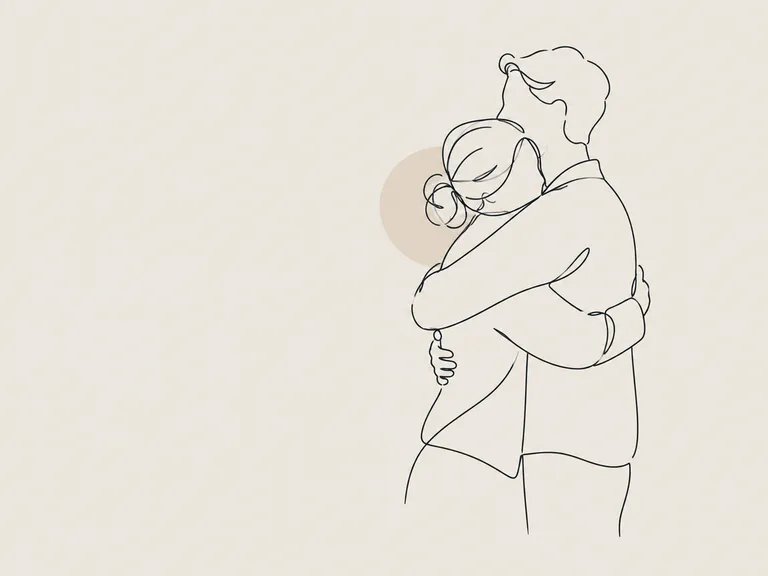
The bear hug sex position is a standing, face-to-face embrace that puts physical and emotional connection front and center. It combines the possibility of deep penetration with a secure, full-body hold, which can create a powerful sense of intimacy. If you and your partner are looking for a way to feel completely wrapped up in each other, this is a great one to try.
How to Do the Bear Hug Position: Step by Step
The Bear Hug is performed standing, face-to-face, in a close full-body embrace. For the best stability, one partner should brace their back against a sturdy wall. This supported version is the most practical and recommended way to start: it removes the balance challenge and lets you focus on closeness.
Lifting a partner is not required and not recommended. The goal is a secure, grounded connection where both partners feel stable.
- Find your support. Choose a solid wall or heavy piece of furniture that will not move. The supporting partner stands with their back firmly against it.
- Establish your stance. Both partners should find a comfortable foot placement. A staggered stance, with one foot slightly forward, offers more stability. Keep knees soft and slightly bent, not locked.
- Move into the embrace. Step in close, chest-to-chest. Wrap your arms around each other in a full, supportive hug. The embrace should feel secure, not restrictive.
- Adjust for entry. The receiving partner can guide the angle for penetration through small shifts in pelvic tilt or foot position. The penetrating partner provides most of the gentle, rocking movement.
- Start slowly. Begin with small, gentle motions. Vigorous thrusting can throw off balance.
Why the Bear Hug Position Works
The Bear Hug works by creating intense physical closeness that makes emotional connection natural. Chest-to-chest contact lets you feel your partner's heartbeat and breathing; the secure wrap of the arms fosters a sense of safety and trust. The "real depth" here is both emotional and physical: while the angle can allow for deep penetration, its lasting benefit is the secure, face-to-face hold that makes kissing, eye contact, and quiet words feel easy and natural. It shifts the focus from mechanics to a shared, intimate experience.
3 Bear Hug Position Variations to Try
These variations change the balance, weight distribution, and angle while keeping the core feeling of closeness. Choose based on your energy, balance, and mood.
- Supported Standing Bear Hug. The most stable and accessible version. One partner leans against a wall, removing the balance challenge entirely. This allows for longer sessions and makes height differences easier to manage.
- Seated (Lotus) Bear Hug. This variation removes the need for balance entirely. One partner sits on the edge of a bed or a sturdy chair; the other sits on their lap, facing them, and they share the embrace. Ideal for prolonged intimacy and closely related to the sitting lotus position.
- Rear Bear Hug. A rear-entry adaptation of the embrace. The penetrating partner stands behind the receiving partner and wraps their arms around their partner's chest or waist. This changes the angle of penetration significantly and reduces face-to-face contact, while maintaining the security of a close hold.
Who the Bear Hug Position Suits (and Who Should Be Careful)
The Bear Hug suits couples who want to increase their emotional and physical intimacy: partners who enjoy prolonged eye contact, kissing, and the feeling of being held securely during sex. The position is adaptable across many body types, with the wall-supported and seated variations extending its accessibility further.
Who Should Be Careful With the Bear Hug Position
This position requires caution for anyone with significant balance issues or acute joint pain in the lower back, hips, or knees. The close embrace can also feel restrictive to some people. Stop immediately if any sharp pain occurs. For most of these situations, the Seated Bear Hug is the safest and most comfortable alternative: it provides all the closeness without the demands on balance or joints.
Bear Hug Comfort, Safety and Communication
Comfort in the Bear Hug position comes from stable support, protected joints, and clear communication. Small adjustments make a big difference. Keep movements small and gentle, avoid sudden twisting, and keep knees slightly bent rather than locked. Adjust the angle of penetration by repositioning your feet, not by forcing your spine. For anyone with existing back pain, a kneeling sex position with good cushioning may be a gentler alternative.
Common fixes:
- Slipping feet: Widen or stagger your stance, check that the floor is not slippery, and use a wall for added stability.
- Tired arms: Take breaks or move to a looser embrace; the seated variation lets arms relax more easily.
- Lower back pressure: Check that knees are not locked and use a wall to maintain a neutral spine. The seated version removes this pressure entirely.
- Embrace feels restrictive: Talk with your partner to find a looser hold that still feels intimate without compressing ribs or shoulders.
Talking About It and Consent
Agree on a simple stop signal before you start: a word or gesture that means "pause immediately" in case of pain, dizziness, or lost balance. During the position, brief check-ins help: "Is this angle comfortable?" or "Should we slow down?" Pay attention to non-verbal cues too: breathing, muscle tension, and facial expressions.
Bear Hug Position FAQ
Is the bear hug position safe during pregnancy?
The seated bear hug is the recommended option during pregnancy, as it avoids the balance demands of the standing version; balance shifts significantly as pregnancy progresses. Always check with your healthcare provider before trying any new position during pregnancy, and stop immediately if anything feels uncomfortable or strained.
Is the Bear Hug position physically demanding?
The unsupported standing version can be demanding on leg strength and balance. The wall-supported and seated variations are much less strenuous and more sustainable for longer sessions, making the position accessible to most people.
Can you do the Bear Hug position if you have back or knee pain?
The seated version is the most joint-friendly option for either condition. For back pain, using a wall for support helps maintain a neutral spine and reduce strain. Stop immediately if any pain occurs, and consider starting with the Seated Bear Hug as a default.
How is the seated bear hug different from the sitting lotus position?
The key difference is the emphasis on the embrace itself: the seated bear hug wraps both arms around the partner for full-body closeness, while the sitting lotus position focuses more on intertwined legs for a stable, hands-free base. Both are close face-to-face positions, but the bear hug prioritizes the hold, while the lotus emphasizes connection through interlaced bodies.
Does the bear hug position provide good clitoral stimulation?
The bear hug position doesn't offer direct clitoral stimulation; its design centers on close embrace and penetration rather than targeted external contact. However, the full-body closeness makes it easy for either partner to add manual stimulation or use a small vibrator without breaking the embrace.