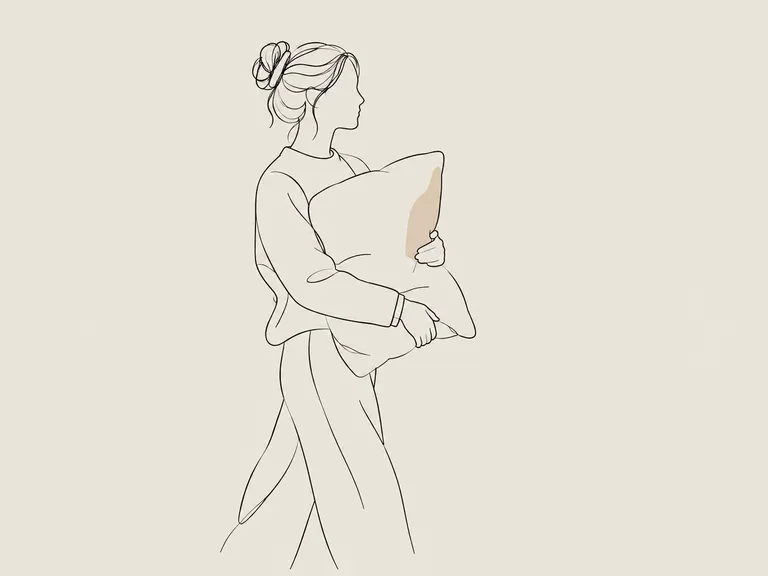
The Pinball Wizard sex position is a face-to-face setup where the receiving partner lies on their back and lifts their hips into a bridge, with their weight on their shoulders and feet, while the penetrating partner kneels between their legs. That upward tilt of the pelvis is what changes the angle, and a few small adjustments (a pillow, a lower lift, a partner's thighs to rest on) keep it comfortable for both of you.
How to Do the Pinball Wizard Position: Step by Step
You need a firm mattress (very soft beds make the bridge wobbly) and a pillow or folded blanket within reach.
- Set up: The receiving partner lies on their back with knees bent and feet flat on the bed, about hip-width apart, arms resting at their sides.
- Kneel in: The penetrating partner kneels between the receiver's feet, facing them, close enough that their knees sit near the receiver's hips. Getting into place before the lift means nobody has to hold a bridge while the other gets organized.
- Lift into a low bridge: The receiving partner presses through their feet and squeezes their glutes to lift their hips a few inches. Their weight rests on their shoulders, upper back and feet, not on their neck. The kneeling partner can rest their hands lightly on the receiver's hips to steady them, or on the bed if their wrists prefer that. The receiver can also slide their own hands under their lower back for extra support.
- Line up and start slowly: If the heights don't match, the kneeling partner sits back toward their heels or kneels taller, rather than asking the receiver to bridge higher. Begin with slow, shallow movement. The receiving partner controls the angle and depth by raising or lowering their hips; the kneeling partner sets the pace. Agree on a quick word or tap that means "pause" before you start.
- Come down gently: The receiver lowers their hips slowly, one section of the spine at a time, whenever they're tired or simply done.
Why the Pinball Wizard Position Works
Lifting the hips tilts the pelvis up, so entry happens at a different angle than in flat missionary. For some people that means more pressure along the front wall of the vagina or toward the prostate, and for some it simply feels fuller; bodies vary, so treat it as an experiment rather than a guarantee.
The angle is also adjustable on the spot: a lower bridge gives a shallower, gentler angle, and a higher one gives a steeper, deeper one. Because you're face to face, you can read each other's expressions and kiss, and either partner has a free hand for the clitoris, penis or a small vibrator.
3 Pinball Wizard Position Variations to Try
- Wedge-supported: A firm cushion or sex wedge does the work of the glutes, the easiest option for long sessions or limited strength.
- Thigh rest: The person underneath settles onto the tops of their partner's thighs, sharing the load while keeping almost the same tilt.
- One leg up: One ankle goes on the partner's shoulder for a narrower, usually deeper angle; drop it if the back of the thigh pulls.
Who the Pinball Wizard Position Suits (and Who Should Skip It)
It suits partners who like eye contact, want to play with angle without complicated choreography, and enjoy a setup where the receiving partner fine-tunes depth with their own hips. It works with a penis or a strap-on and for any gender combination.
Who Should Be Careful
- Neck, shoulder or lower-back problems: Choose a supported variation from the list above, or another position entirely.
- Sore knees or hips on top: Pad them, keep sessions short, or switch positions.
- Pregnancy: See the FAQ below before trying it.
- Feeling dizzy or pressure in the head: Come down right away; with the pelvis above the chest, some people get light-headed.
Pinball Wizard Comfort, Safety and Consent
A folded blanket under the kneeling partner's knees and a pillow within reach solve most comfort problems. The receiving partner keeps their head flat and chin slightly tucked, never turning their head sharply while bridged. Use plenty of lube, especially as the angle changes.
Talking About It and Consent
Agree before you start that either of you can stop or change position at any moment, and that this is a normal part of trying something new. Quick check-ins keep it easy:
- "Is your back okay at this height?"
- "How are your knees holding up?"
- "Lower, higher, or slower?"
Sharp, burning or pinching pain means stop, not push through. Lowering the bridge or switching to a flat position is always a good answer.
Related Positions
If holding the hips up isn't for you, an upright position where the other partner is on top, such as the cowboy position or the reverse cowgirl position, shifts the effort elsewhere. For more ideas, browse our overview of types of sex positions.
Pinball Wizard Position FAQ
Is the Pinball Wizard position good for beginners?
Yes, as long as you start with a low or wedge-supported bridge. The lift comes mostly from the glutes and thighs, not just the abs, so you don't need athletic core strength. If your legs start shaking after a minute, that's your cue to add a pillow rather than push on.
Can you do the Pinball Wizard position while pregnant?
It's usually not a good choice from mid-pregnancy onward. Lying flat on your back for long stretches in later pregnancy can make some people dizzy or nauseous, and bridging adds load to an already strained lower back. Side-lying or on-top positions are generally more comfortable; check with your midwife or doctor if you have any pregnancy complications.
How does it compare with propped-up missionary?
It's muscle-powered rather than cushion-powered. In propped-up missionary the cushion does the work and the top partner usually leans forward; here the top stays upright, and the angle can change mid-session, at the cost of more effort.
What if it feels uncomfortable deep inside?
Lower the bridge first, because a higher lift usually means deeper entry. For people with a cervix, deep contact with it can ache, and that's a common reason this angle feels too intense. Shallower movement or a wedge at a lower height usually helps; if the discomfort continues even after sex, it's worth talking to a healthcare provider.